
Entrepreneurial Burnout Symptoms: How to Recognize the Signs and Respond
What if the exhaustion you keep treating as the cost of growth is also revealing a business that depends too heavily on you? A demanding season can leave any owner tired, but persistent fatigue, slipping focus, or less satisfaction in decisions deserve attention. These may be entrepreneurial burnout symptoms, though they aren’t enough to diagnose burnout on their own.
If you’re wondering whether this is a temporary pressure spike or a deeper pattern, the distinction matters. This article will help you recognize possible signs, examine how your workload and operating model may contribute to strain, and choose a practical next step. It will also help you understand when it may be appropriate to seek support from a qualified professional.
We’ll look at changes in energy, concentration, and your relationship with work, then examine what happens when too many decisions and responsibilities route through the founder. The goal isn’t to label yourself. It’s to assess the signals clearly and respond in a way that supports your well-being and your business’s long-term resilience.
Key Takeaways
- Entrepreneurial burnout symptoms may include persistent exhaustion, detachment, or reduced effectiveness. Recognizing signs isn’t the same as self-diagnosing.
- Track when strain appears and what work patterns surround it, such as decision overload, constant urgency, or limited recovery.
- Choose one operational adjustment to test, such as clarifying who owns a recurring decision or reducing avoidable interruptions.
- If symptoms persist or disrupt daily life, consider speaking with a qualified healthcare professional. Peer discussion can help you examine business constraints, but it isn’t clinical care.
What Are Entrepreneurial Burnout Symptoms? Recognize the Changes That Persist
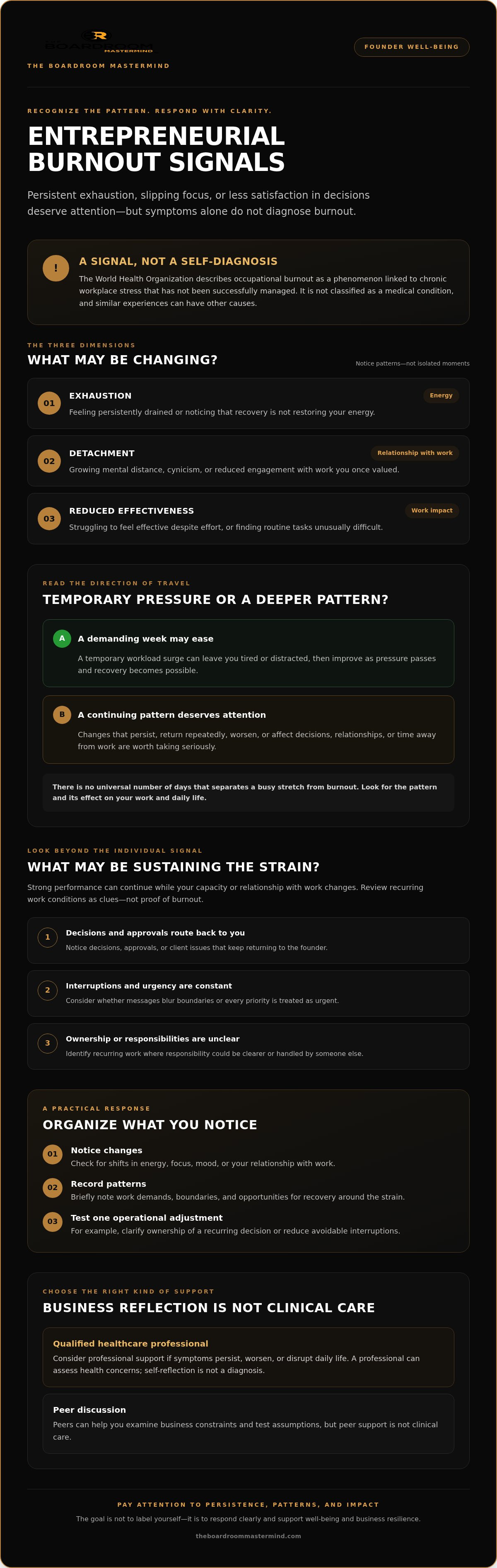
Entrepreneurial burnout symptoms are possible signs of sustained work-related strain, not a self-diagnosis. The World Health Organization describes burnout in the occupational context as a phenomenon linked to chronic workplace stress that hasn’t been successfully managed. It isn’t classified as a medical condition, and similar experiences can have other causes. The Occupational burnout overview summarizes WHO’s three dimensions: exhaustion, increased mental distance or cynicism toward work, and reduced professional efficacy.
In brief: burnout is associated with depletion, growing detachment from work, and a diminished sense of effectiveness. These dimensions can look different from one business owner to another. Treat them as signals to pay attention to, not proof of a diagnosis.
Which changes may signal entrepreneurial burnout?
Notice whether you’re persistently drained, increasingly detached from a business you once valued, or struggling to feel effective despite working hard. You might withdraw from colleagues, put off decisions, lose focus in meetings, or find routine tasks unusually difficult. None of these behaviors confirms burnout on its own. The pattern, persistence, and effect on your work and daily life matter.
How is burnout different from a demanding week?
A temporary surge in workload may leave you tired or distracted, then ease as the pressure passes and recovery becomes possible. A more concerning pattern is a change that continues, returns repeatedly, or starts affecting several parts of your routine, such as decision-making, relationships, or time away from work. There’s no universal number of days that separates a busy stretch from burnout.
Look at the direction of travel. Are your energy and sense of effectiveness returning, or is distance from work becoming your default? If changes persist, worsen, or disrupt your life, consider speaking with a qualified healthcare professional. A clear account of what you’ve noticed can help you explain your concerns without trying to diagnose yourself.
Why Entrepreneurial Burnout Can Hide Behind Success and Constant Responsibility
A business can keep growing while its owner’s capacity changes. Revenue, deadlines, and a capable team may make strain easy to overlook, especially if long hours have become part of the operating norm. But pushing harder isn’t a reliable answer to persistent pressure, and struggling doesn’t mean you lack discipline.
Personal symptoms are signals. The conditions of work are clues about what may be sustaining the strain. Entrepreneurial burnout symptoms can coexist with strong performance, so outward results alone don’t tell the full story.
Why can a successful business owner miss the warning signs?
Achievement can reward habits that make it harder to notice changing capacity: taking the urgent call, approving one more decision, or treating recovery as optional. You may still meet commitments while feeling less engaged, more irritable, or increasingly detached from the work. Performance can continue even as your relationship with the business changes.
Can business structure contribute to ongoing strain?
Look for recurring bottlenecks. Which decisions, approvals, or client issues keep returning to you? Are boundaries blurred by constant messages, or does every priority become urgent? These patterns don’t prove burnout, and founder dependence isn’t the cause in every business. They can, however, reveal operating conditions worth reviewing. A peer group for experienced entrepreneurs can offer a place to discuss business constraints and test assumptions, but it isn’t clinical care. Focus your review on specific recurring work: note which decisions require your approval, which interruptions could be handled by someone else, and where responsibilities are unclear.
Respond to Entrepreneurial Burnout Without Guessing
Make the next move based on patterns, not pressure to push through. A practical review can help you identify where work is taking a toll, while a qualified healthcare professional can assess concerns about your health.
Self-reflection can clarify what’s changing; professional assessment is the right step for evaluating persistent or disruptive symptoms. Use this sequence to organize what you’re noticing:
- Notice changes: Identify shifts in energy, focus, mood, or your relationship with work.
- Record patterns: Briefly note work demands, boundaries, recovery time, and when changes occur.
- Find pressure points: Look for recurring overload, unclear decision ownership, or interruptions that keep pulling you back in.
- Choose one adjustment: Consider a realistic change to workload, decision rights, support, or protected recovery time, then observe what changes.
What should you track before making changes?
Keep your notes simple and specific. Record your energy and concentration, the demands that filled your workday, whether work crossed into personal time, and whether you had room to recover. You could note the decision or interruption that took the most attention, who was responsible for it, and whether the same issue came up again. Over time, these notes may help you see which conditions coincide with harder days. Don’t use a checklist or article as a diagnostic instrument, or assume one adjustment will resolve the issue.
When should an entrepreneur seek professional support?
If entrepreneurial burnout symptoms persist, worsen, or disrupt daily life, discuss them with a qualified healthcare professional. Bring your observations and explain how the changes affect your work and life; you don’t need to arrive with a label. If you’re in immediate danger or at risk of harm, contact local emergency services or local crisis support.
Business review can complement, not replace, healthcare support. For experienced owners who want to examine business constraints with peers, explore the Boardroom Mastermind Membership as an operational discussion resource, not a treatment for burnout.
Build a More Sustainable Leadership Rhythm and Find the Right Peer Support
Use what you’ve observed to adjust the operating rhythm, not just your personal effort. Clarify who owns recurring decisions, set expectations for which issues truly need your attention, and reduce avoidable interruptions by creating focused work periods. Protect recovery time as a real commitment in the calendar. These changes won’t guarantee a quick fix, but they can help you test whether the way work is structured is adding strain.
What can an experienced peer group contribute?
Owners can benefit from a place to discuss business realities candidly with people who understand the stakes. Peer discussion, accountability, and business-model review can help you test practical questions: Is every approval routing through you? Does your current growth plan depend on a pace you can’t sustain? The Boardroom Mastermind Membership is designed for experienced real estate investors and entrepreneurs, with peer collaboration and quarterly in-person intensives focused on auditing business models and optimizing growth. Explore the quarterly intensive experience to understand the membership format.
That perspective may inform operating decisions, but it isn’t therapy or medical care. Peer input complements, rather than replaces, support from a qualified healthcare professional when symptoms persist or disrupt your life.
How can you evaluate support before committing?
Ask whether a group is built for experienced owners, whether its conversations address the decisions and business constraints you’re facing, and whether its format fits how you prefer to engage. Look for relevant strategic discussion, not promises to treat burnout. The Boardroom Mastermind is a peer group and educational platform for experienced operators seeking collaboration, accountability, and leadership development. If that matches what you need, review the Boardroom membership experience and decide whether it merits a closer look.
A more sustainable leadership rhythm starts with deliberate operating choices and the right kind of support. If entrepreneurial burnout symptoms are a concern, keep healthcare guidance separate from business-model review, and use each resource for what it can genuinely provide.
Lead With Greater Clarity and a More Sustainable Rhythm
Recognizing entrepreneurial burnout symptoms isn’t about labeling yourself. It’s a prompt to notice persistent changes, examine the work patterns around them, and make deliberate adjustments rather than relying on more effort alone. Clarifying decision ownership, reducing avoidable interruptions, and protecting recovery can help you build a business that doesn’t depend on constant founder availability.
If symptoms persist or disrupt daily life, speak with a qualified healthcare professional. Business-model reflection and peer input can support operational decisions, but they aren’t a substitute for healthcare.
For experienced real estate investors and entrepreneurs, The Boardroom Mastermind Membership offers peer collaboration and quarterly in-person intensives focused on business-model review, collaboration, and growth. If strategic discussion with experienced operators could help you assess your next business decision, explore The Boardroom Mastermind Membership.
Frequently Asked Questions
What are the most common entrepreneurial burnout symptoms?
Common entrepreneurial burnout symptoms include persistent exhaustion, increasing mental distance or cynicism toward work, and a reduced sense of professional effectiveness. You might also notice difficulty concentrating, withdrawing from colleagues, or finding decisions harder to make. These signs can have other causes and don’t confirm burnout. Look at whether changes persist or affect your work and daily life, rather than relying on one symptom alone.
How can I tell whether I am burned out or just stressed?
A demanding period may bring temporary stress that eases as the pressure passes and you have room to recover. Burnout is associated with chronic, unmanaged work stress and a pattern of exhaustion, detachment or cynicism, and reduced professional efficacy. There’s no universal time threshold that distinguishes the two, and an article can’t diagnose you. If changes persist, worsen, or disrupt daily life, consider speaking with a qualified healthcare professional.
Can entrepreneurs experience burnout even if their business is successful?
Yes. Business performance and personal well-being aren’t the same measure. A company may continue meeting targets while its owner feels increasingly depleted, detached from work, or less effective. Success can also make strain easier to overlook if long hours and constant availability seem like the price of growth. Consider both the results the business is producing and the impact its operating demands may be having on you.
What should I do if I recognize entrepreneurial burnout symptoms?
Start by noting what has changed and recording work demands, energy, concentration, boundaries, and opportunities to recover. Look for recurring pressure points, then test one practical adjustment, such as clarifying who owns a decision or reducing avoidable interruptions. These notes aren’t a diagnosis. If symptoms persist, worsen, or disrupt daily life, contact a qualified healthcare professional. If there’s immediate danger or risk of harm, seek local emergency support.
Can a mastermind group help with entrepreneurial burnout?
A mastermind group may offer useful business perspective, but it isn’t treatment for burnout. Candid peer discussion can help experienced owners test assumptions, review business-model constraints, and consider changes to decision ownership or workload. The Boardroom Mastermind Membership is designed for experienced real estate investors and entrepreneurs, with collaboration, accountability, leadership development, and quarterly in-person intensives. Peer support complements, but doesn’t replace, healthcare or mental-health support when needed.

Disclaimer
Mr. Clothier is an expert in real estate investing. As such his experiences are not necessarily typical to the standard real estate investor and whose results may vary. The successes shared on this site are not considered typical. Most individuals who order the educational materials and systems probably do not follow any of the techniques or strategies and consequently make little to no money due to their inaction. The company is in the process of determining the typical success of its clients. Stories shared herein are for example purpose only and should not be construed as "guarantees" of success. Results will vary based on background, education, and experience and actions taken.
This site is not a part of the Google/Facebook website or Google/Facebook Inc. Additionally, this site is NOT endorsed by or affiliated with Google/Facebook in any way. GOOGLE/FACEBOOK is a trademark of GOOGLE/FACEBOOK, Inc.
INCOME DISCLAIMER: This website and the items it distributes contain business strategies, marketing methods and other business advice that, regardless of referenced results and experience, may not produce the same results (or any results) for you. The Boardroom Mastermind makes absolutely no guarantee, expressed or implied, that by following the advice or content available from this web site you will make any money or improve current profits, as there are several factors and variables that come into play regarding any given business. Primarily, results will depend on the nature of the product or business model, the conditions of the marketplace, the experience of the individual, and situations and elements that are beyond your control. As with any business endeavor, you assume all risk related to investment and money based on your own discretion and at your own potential expense.
LIABILITY DISCLAIMER: By reading this website or the documents it offers, you assume all risks associated with using the advice given, with a full understanding that you, solely, are responsible for anything that may occur as a result of putting this information into action in any way, and regardless of your interpretation of the advice. You further agree that The Boardroom Mastermind, its affiliates, subsidiaries, officers and agents, cannot be held responsible in any way for the success or failure of your business as a result of the information provided. It is your responsibility to conduct your own due diligence regarding the safe and successful operation of your business. In summary, you understand that we make absolutely no guarantees regarding income as a result of applying this information, as well as the fact that you are solely responsible for the results of any action taken on your part as a result of any given information. In addition, you agree that our content is to be considered "for entertainment purposes only". Always seek the advice of a professional when making legal, financial, tax, or business decisions.
BUSINESS OPPORTUNITY: All products and services offered by The Boardroom Mastermind are intended to provide prospective purchasers with general business strategies, marketing methods and other general advice for business development and training. At no point is The Boardroom Mastermind soliciting anyone to enter into a new business nor is it representing, either expressly or by implication, that it will provide locations for a business, provide outlets, accounts, or customers, or purchase any of the goods or services made by the purchaser.
The products being offered through this promotion are packages of informational tools to help you learn about business and deal making strategies.


